SMART-Signal system
The SMART-Signal system has three major components: data collection, performance measurements, and performance presentation
through user interfaces. The data collection component collects high-resolution raw data directly from the field on an event-by-event
basis. Signal phase change events and vehicle-detector actuation events are acquired separately from data collection units located in
traffic signal cabinets. The event-based raw data will be packaged and sent to the data server located at the center in real-time.
The second component of the SMART-Signal system is performance measurement using the field-collected data. A set of traffic signal
performance measures, such as intersection queue length and arterial travel time, is computed using the developed algorithms. Once
all performance measures have been derived from the raw data, the results are made accessible to a variety of users.
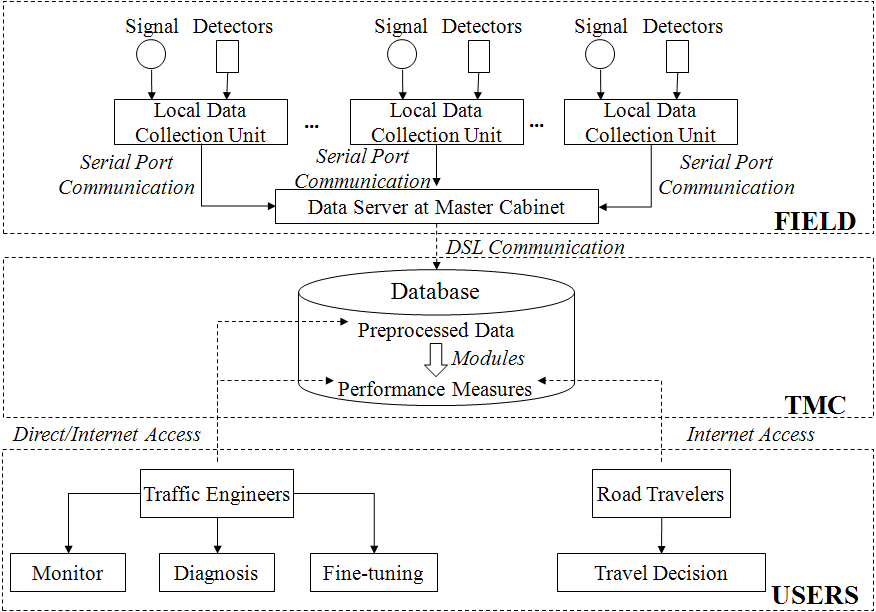
The SMART Signal system was developed by Henry Liu to improve traffic management on urban arterial corridors.
- About us Xinkai Wu Parter Students
- Research Interests Electric Vehicles Connected Vehicles Complex Urban Network
- Teaching Courses Caltrans Tranining Textbooks
- Labs Hardware-In-Loop Driver Simulator Multi-Modal
- Links Cal Poly Pomona College of Engineering SMART Signal
2016 Xinkai Wu. All rights reserved. Xinkai Wu